
How to play BlackjackThe Rules of Blackjack or '21'Blackjack is one of the most popular card games on the planet thanks to it's deceptively simple rules and one very important and unique characteristic: the ability to use certain advanced playing strategies to turn the overall statistical advantage away from the casino and back into the hands of the skilled player. This is intended as a basic overview of the essential rules of blackjack without detailed descriptions of various types of rules or game variations. Once you understand the basics provided in this simple tutorial you are well on your way to getting started with more advanced tips and tricks. Blackjack is played with one or more decks of playing cards, each containing 52 cards. Decks used in a single game range from 1 to 8 with 4, 6 and 8 being the most common. The number of players (besides the dealer) ranges from 1 to 6, with 1 to 4 being the average. Single or double card decks may be dealt by hand, however large decks and in more upscale casinos most cards are shuffled using a shoe. Card Values
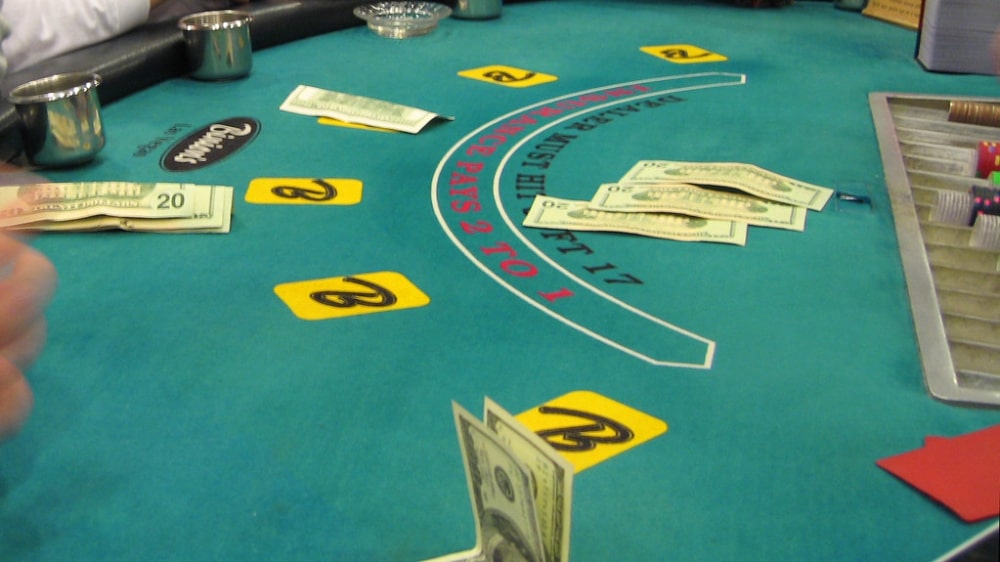
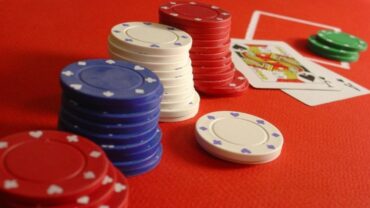
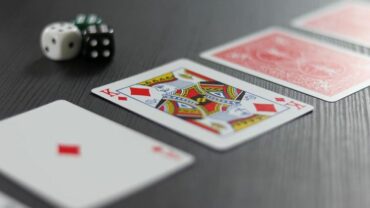
It might seem obvious that the point is to be the first to reach a hand of '21,' but the real goal is to beat the dealer who is also trying to get to a value of 21 without going over. There are a few key rules that are in the players favor, specifically that dealers must hit if the value of their cards is 16 or less and stand if 17 or above. Many casinos have a variation where the dealer will continue to draw until receiving a "soft" 17. Soft or Hard hands refer to having an ace, as in a soft hand, because it may be counted as 11. The most typical card combination for a soft 17 is an ace and a 6. This is actually a disadvantage to the player as it gives the dealer a chance to improve their hand. The best hand to have is the "Natural Blackjack" of two cards. This can only be done by drawing an Ace and a second card worth 10. Also unique to Blackjack this hand results in a pay out of 3:2 or $15 on a $10 bet. But before you get too excited check that the dealer doesn't also have a blackjack. This would result in a tie, also called a "push" or "stand-off" and that would only return the original amount (known as "even money"). Generally casinos have several different blackjack tables with a range of minimum and maximum bet amounts. This can be found by looking to a small sized placard describing the minimum and maximum bet amounts, the averages being a $5 minimum and $2,000 maximum. Online casinos generally have a $1 minimum and a $500 maximum. This is also where you would look to determine the specific rule variations as determined by the house. The most common rule variations are on how and when a player can double down or split pairs. Once a player sits down he or she must place a bet. This is done by locating the betting square or circle directly in font of the player's seat on the table while facing the dealer. Large denomination chips on the bottom, please. Once each player has made their bets they receive two cards each including the dealer. If the chips have not been properly placed the dealer may ask you to or personally rearrange them so that only the smallest chips are on top. Face Up or Face Down?There are two ways of playing blackjack. The first is face up. This means that as the cards are dealt out they are face up. Players may not touch the cards in this style of play and this is the rational behind the famous hand signals used to indicate the players next move. All games played using a shoe are played face up. Face down is an older style of play and while you are allowed to touch the cards, it can only be with one hand and this is often confusing for players who are used to handling cards with both hands from other games, like poker. In both variations the dealer exposes a single card face up. Okay, you've made your bet, looked at your cards and now what do you do? Well you have a few options. Hit (aka. draw) To get closer to the number 21 a player may decide to take another card. This is indicated using hand signals as verbal commands are not accepted. This is because games are video recorded from the "eye in the sky" above the casino floor, in order to prevent differences in opinion at a later time. But be careful because if your hand goes over 21 you automatically "bust" and forfeit your entire bet. Stand (aka. stay) A player may chose not to accept any more cards and does so with the aim that their current hand is stronger than the dealer's. Double Down This is the most complex move in blackjack due to the large number of rule variations around it. A double down happens when a player doubles the original bet (that's the universal rule, no other values are allowed) by placing an equal pile of chips alongside the original bet and in doing so accepts one more card no matter what the value winds up being. Because of the advantage that this gives to players some casinos have rules that restrict doubling down to hands that have a value of 10 or 11. British Pontoon (Blackjack) players can only double down on cards with a value of 9-11. Split If you happen to be lucky you might receive two identical cards on the first draw. If this happens you can elect to split the pair. To do so you place a second bet equal to the original to the side. The dealer then gives the first card another card and a the game is continued. However if that hand busts or the player decides to stand then the split card is then played. Insurance Insurance only happens when the player suspects that the dealer has a blackjack and wishes to minimize the loss to his or her original bet. Insurance is a secondary bet that ensures that a player loses the first bet but comes out even. However insurance is generally a losing bet and should only happen when the exposed dealer card is an ace and the player has a strong reason to suspect that the other card has a value of 10. Generally only proficient card counters are able to recognize this with any probability of success. Surrender Surrender is forfeiting 50% of the amount wagered to end the game at the current hand. Many casinos have specific rules forbidding or allowing surrender only at certain times, such as late in the game (e.g. no early surrender). |